
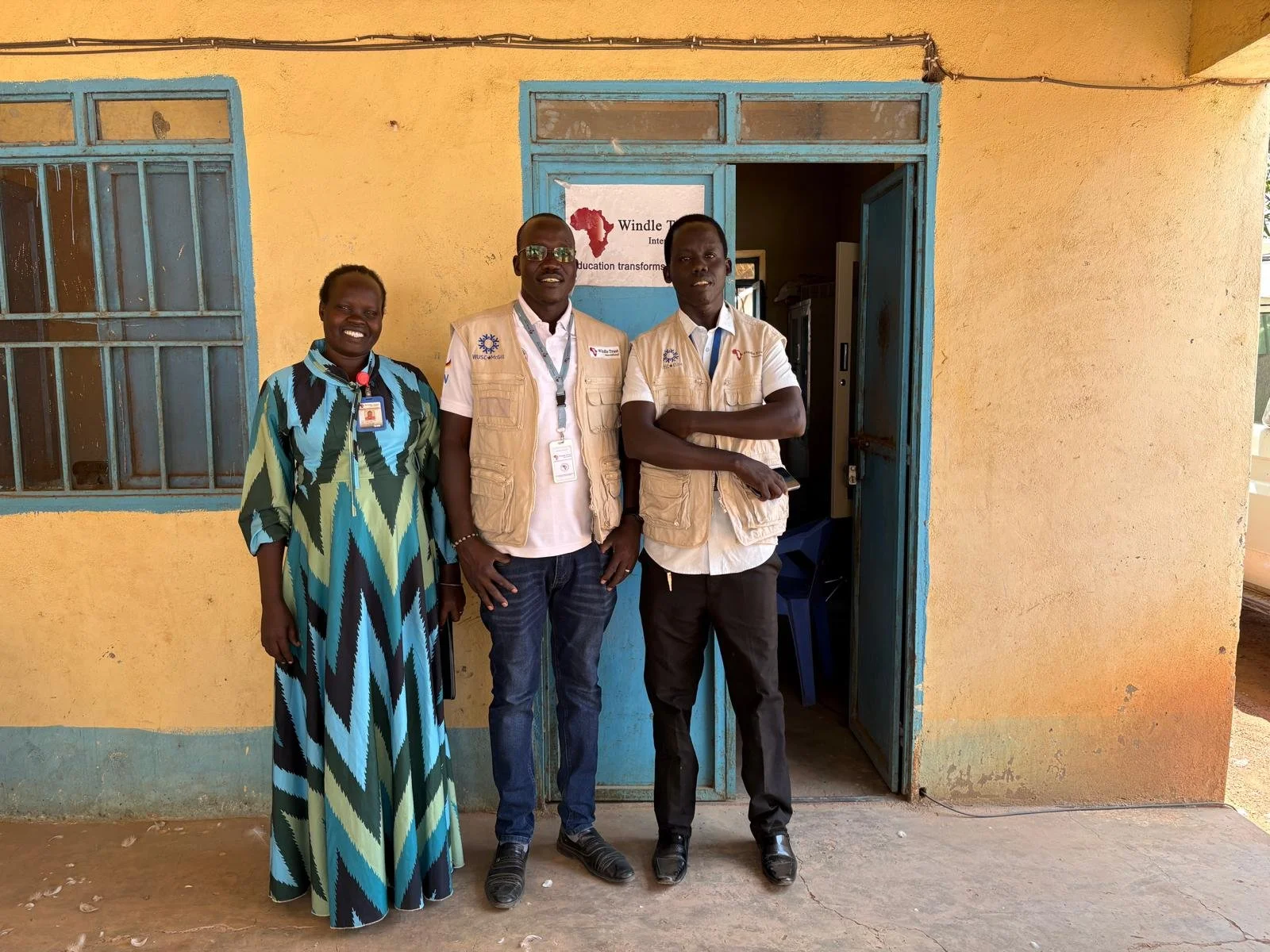
The field team: Regina (left) with Mark (centre) and Simon (right) outside the WTI office in Aweil.
Behind every WTI project are dedicated staff working alongside communities every day.
Regina Ajok Deng is a Project Officer based in Aweil, Northern Bahr el Ghazal State in South Sudan, supporting Accelerated Secondary Education Programmes (ASEP) that help learners continue and complete their education. We spoke to Regina about what her typical day at work looks like, what motivates her, and her hopes for the future of education in South Sudan.
Hi Regina! What does a day in your life look like?
My working day starts early. I wake up, prepare my children for school and get them ready by 6:30am. After that, I get myself ready for work and call a boda boda rider (motorcycle taxi) to pick me up at around 7:30am. I start work at 8:30am and finish at 5:30pm. In the office, I follow my daily, weekly and monthly work plans and organise activities based on my priorities for the day.
When I am travelling to the field, I first carry out a security check by phone with focal persons on the ground. Depending on the activity, I travel using an office motorbike or vehicle. I visit schools and ASEP centres, meet with tutors and learners, monitor activities and make sure everything is progressing as planned before returning to the office.
What does a typical week involve?
No two weeks are exactly the same, but most include a mixture of planning, reporting, meetings and field visits.
I work closely with lead tutors, prepare tracking sheets for learners and tutors, organise upcoming activities and complete reporting and accountability requirements. I also spend time mobilising participants for future trainings and project activities.
During field visits, I meet lead tutors, tutors and learners, check attendance records, observe lessons and monitor progress in ASEP centres. These visits help me understand what is working well and identify any challenges so I can provide accurate updates to managers and other project stakeholders.
Tell us about the team in Aweil.
There are three of us in the Aweil field office. Alongside me are the other Project Officers, Mark Kuol and Simon Lual, and we all work very closely together.
We often plan field visits jointly, share transport when travelling to the same locations and support each other's projects when needed. This means that if one person is on leave or unwell, another team member can continue activities without disrupting implementation.
We also coordinate closely with colleagues in Juba. The field team are the eyes and ears of the organisation because we work directly with communities, learners and beneficiaries every day.
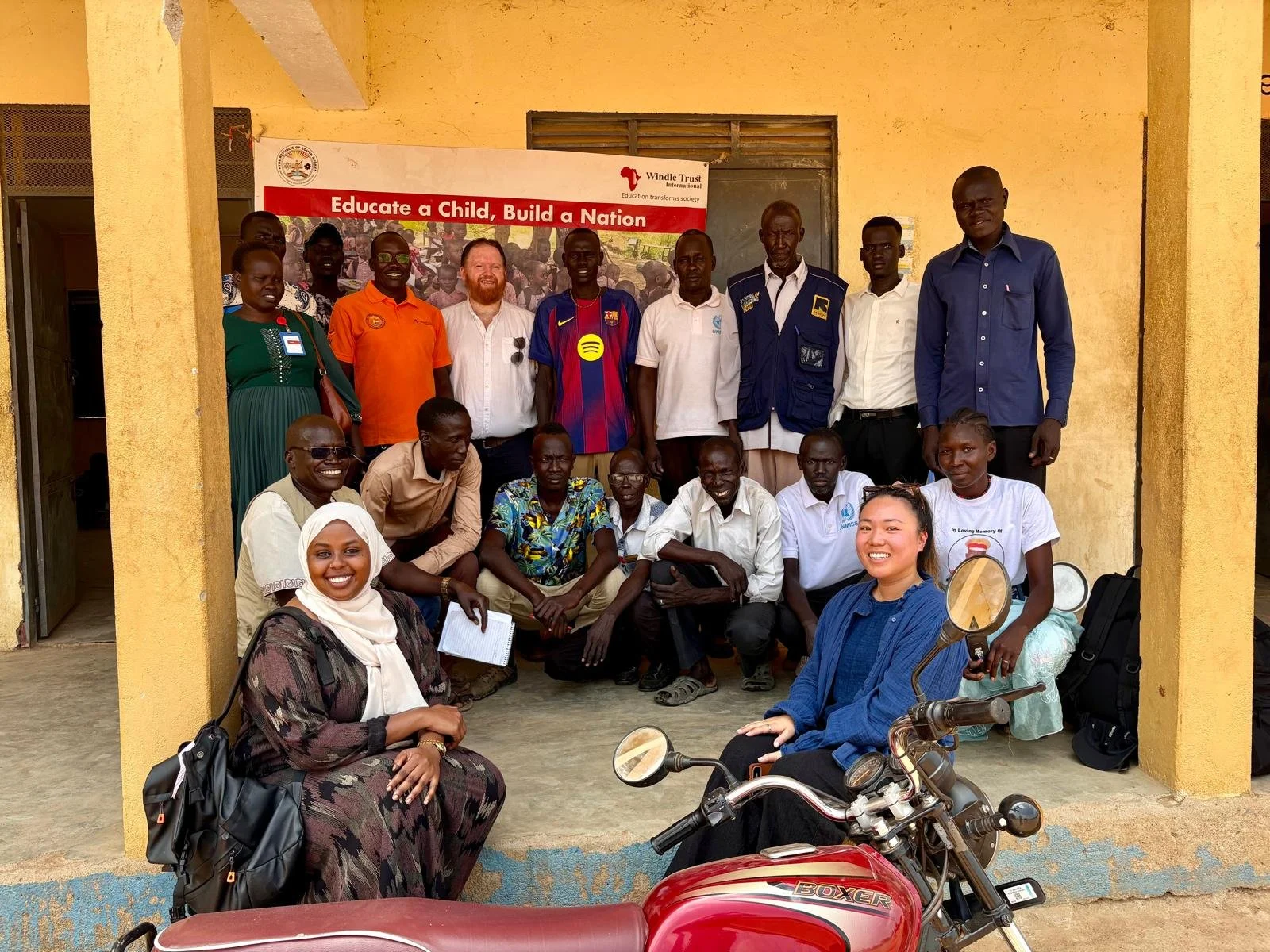
Regina (top left) with WTI colleagues and teaching staff at one of the ASEP centres in Aweil.
What do you enjoy most about your job?
My favourite thing about this job is the positive impact it has on teachers and learners, helping people realise their potential and improve their professional and educational opportunities.
The role has also contributed greatly to my own professional growth. I work with experienced educators and professionals, which allows me to learn, share ideas and strengthen my skills.
It has helped me better understand the education challenges facing South Sudan and think critically about how those challenges can be addressed.
Why is education so important to you?
I do this job because I want to strengthen the capacity of teachers and improve the quality of education in my community.
Education helps people gain knowledge, skills and confidence. It allows people to think critically, solve problems, make informed decisions and build better futures for themselves and their families.
For Aweil, education promotes social development, equality and community awareness. For South Sudan, it contributes to national growth, economic development, innovation and positive social change.
What are some of the biggest challenges facing education in Aweil?
There are many challenges.
During the rainy season, flooding can force schools to close, especially in low-lying areas. Many schools also have very poor infrastructure, with some classes still taking place under trees.
There is also a shortage of qualified teachers, and many schools struggle to retain staff. Limited funding means there are not enough education projects operating in the area, while poor road networks make some communities difficult to reach.
High levels of illiteracy, economic hardship and the effects of conflict also make improving education more difficult.
What are your hopes for the future?
I would like to see more qualified teachers recruited and motivated. I hope all children can access quality education in safe classrooms with adequate teaching and learning materials.
I would also like to see stronger teacher training institutions, improved school infrastructure, increased enrolment and more opportunities for vocational skills development.
Most importantly, I hope communities continue to play an active role in supporting and sustaining education so that future generations can benefit from better opportunities.
Thank you Regina for your time and giving us a glimpse into your work and life in Aweil.
Organisations are often defined by their programmes and projects, but those are only possible because of the people behind them. Across South Sudan, colleagues like Regina work every day alongside learners, teachers and communities to help make education accessible to those who need it most.