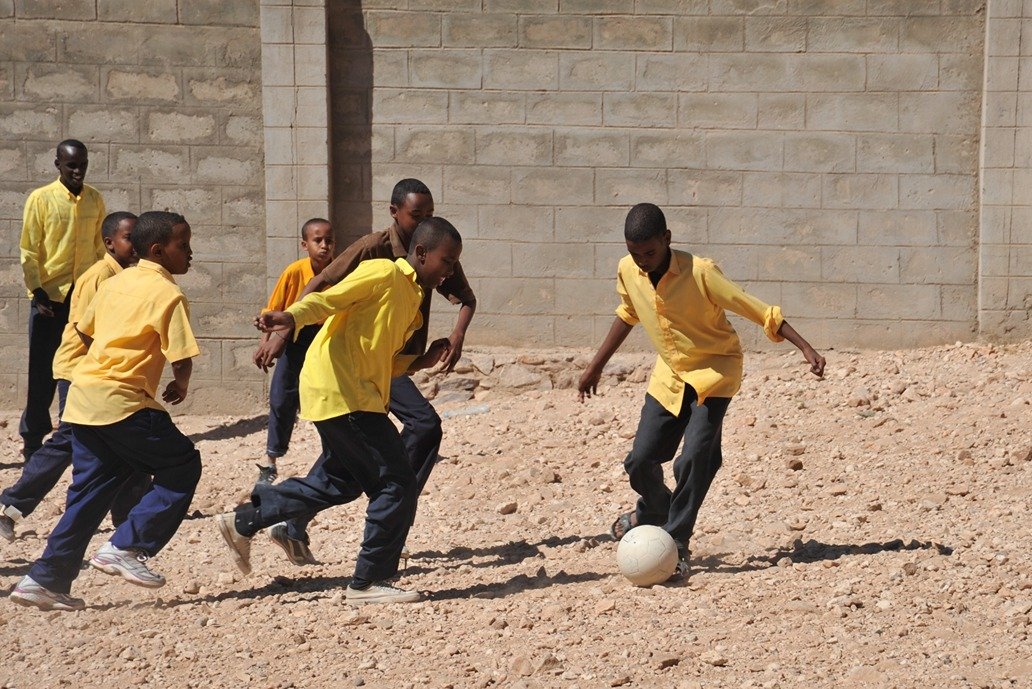
Education in Somaliland
Somaliland, an autonomous region in the Horn of Africa, stands as a unique example of resilience and self-determination.
Despite lacking international recognition, it functions with its own governance, borders, and currency. “A special case even among unrecognised states”, Somaliland’s future relies upon its educational system: a pivotal element in the quest for sustainable development and global integration, and a system facing unique challenges and opportunities.
The region's commitment to enhancing educational access and outcomes is evident, with a particular emphasis on the role of English language education. This language proficiency is key to unlocking global opportunities and fostering socio-economic growth. WTI, while in the early stages of its involvement in Somaliland, aligns with these aspirations, aiming to contribute to the region's educational landscape, especially through English language training.
Historical and Regional Context

Somaliland's education system has evolved significantly since its separation from Somalia in the early 1990s.
Emerging from a history of conflict and neglect, the region has witnessed a notable expansion in educational facilities and investment in the last two decades. The government's recognition of education as a cornerstone of national development has led to significant strides in educational infrastructure and enrolment rates.
The role of the English language in Somaliland, a former British protectorate, is particularly significant in higher education and the professional realm. Proficiency in English is seen as a vital asset for the region's youth, aligning with global trends and aspirations for international trade and diplomacy.

The Education System in Somaliland
Somaliland's education system comprises pre-primary, primary/alternative, secondary/vocational, and higher education levels. Each stage contributes to national development, from foundational early childhood learning to specialised higher education programmes, many delivered in English.
Despite steady expansion, the system continues to face structural and capacity-related challenges particularly in access, infrastructure, teacher qualifications, and gender equity.
At Primary level:
The average pupil–classroom ratio stands at 65:1, rising to 78:1 in regions such as Hawd
Only 58% of teachers meet the minimum qualification standard of a teaching diploma
Women remain underrepresented in the profession and make up just 20% of primary teachers (2,190 in total) - of these, only 1,065 hold a diploma, 180 hold a degree, and just 11 have a Master’s qualification.
At Secondary level:
The average pupil–classroom ratio remains high at 51:1.
There are 2,752 secondary teachers nationally, but only 108 are female (3.92%).
While 78% of secondary teachers are considered qualified overall, the gender imbalance is stark. Among female secondary teachers, 44 hold a degree, 40 a diploma, 3 a Master’s qualification, and 21 remain untrained.
These figures* demonstrate both measurable progress and persistent gaps. Teacher shortages, overcrowded classrooms, and limited female representation continue to affect quality and equity across the system.
Access also remains uneven, particularly in rural communities and among internally displaced and nomadic populations. Additionally, the transition from Somali to English as the language of instruction at secondary level presents a substantial barrier for many students, especially where teachers’ proficiency in English varies.
WTI’s emerging role in Somaliland focuses on strengthening English language proficiency among teachers and students. By addressing language capacity within the existing system pressures, this approach supports improved learning outcomes and contributes to Somaliland’s broader educational and economic aspirations.
*These statistics are from the Annual Education Statistics Yearbook 2025 by the Ministry of Education and Science, Republic of Somaliland.

WTI’s Strategic Approach in Somaliland
As WTI commences its engagement in Somaliland, its approach is strategically tailored to address the specific needs of the region’s education system.
WTI recognises the pivotal role that language plays in education and is therefore focusing on enhancing English language proficiency, a crucial step towards improving overall educational quality and outcomes in Somaliland.
Our focus includes:
-
Central to WTI's strategy is the training and development of teachers, particularly in the area of English language instruction. By equipping teachers with advanced English language skills and modern pedagogical techniques, WTI aims to address the gap in qualified English language educators in Somaliland.
-
Alongside teacher training, WTI plans to assist in the development of a curriculum that integrates English language learning effectively. This involves creating culturally relevant and contextually appropriate teaching materials that align with Somaliland’s educational goals and standards.
-
Recognizing the diverse needs of Somaliland's student population, WTI's approach includes community engagement initiatives aimed at promoting inclusivity and access to education for all, including girls and marginalised groups. This involves working closely with local communities to understand their specific educational needs and challenges.
-
WTI's partnership with local institutions, such as Edna Adan University, is pivotal in ensuring the sustainability and relevance of its programmes. These partnerships help in establishing a local ownership of educational initiatives and foster a collaborative environment for the implementation of effective teaching and learning practices.
-
To assess the impact of its interventions and ensure continuous improvement, WTI implements robust monitoring and evaluation mechanisms. This allows for the assessment of programme effectiveness, identification of areas for improvement, and adaptation of strategies to better meet the evolving needs of Somaliland's education system.
Impact and future outlook
The impact of WTI's initiatives in Somaliland is expected to be far-reaching, influencing various aspects of the education system and extending into the broader socio-economic fabric of the region.
Empowering educators
Training and developing educators not only improves their teaching efficacy but also empowers them as agents of change within their communities. Skilled teachers are better equipped to inspire and engage students, leading to improved learning outcomes and student retention rates.
Sustainability and long-term goals
WTI is committed to the sustainability of its projects in Somaliland. By building capacities and establishing strong partnerships with local institutions, WTI aims to ensure that the improvements in the education system are enduring and continue to evolve to meet future needs.
Fostering economic growth and global intergration
Proficiency in English opens up myriad opportunities for Somaliland's youth in the global job market. It enables them to engage more effectively in international trade and diplomacy, fostering economic growth and global integration for the region.
Looking ahead
The future outlook for Somaliland's education system, with the support of WTI and other stakeholders, is one of growth and improvement. The focus remains on overcoming existing challenges and harnessing the potential of education as a catalyst for national development.
Education for an empowered future
As we reflect on the education landscape of Somaliland and the role of WTI in this context, it becomes clear that education is more than just a pathway to knowledge. It is a vital tool for empowerment, a means to unlock potential, and a foundation for sustainable development. In a region marked by resilience and aspiration, the impact of quality education, particularly in the realm of English language proficiency, extends far beyond the classroom walls.
WTI's involvement in Somaliland, though in its early stages, is a testament to the organisation's commitment to educational excellence and its recognition of the transformative power of language education. By focusing on enhancing English language skills among teachers and students, WTI is not just addressing a key educational need but is also contributing to building a more connected and empowered Somaliland.
The challenges facing Somaliland's education system are significant, yet they are met with an unwavering spirit of determination and hope. With continued efforts and strategic interventions, the potential for transformative change is immense. As WTI continues to collaborate with local partners and communities, its role in shaping the future of education in Somaliland becomes increasingly integral.
The journey of improving education in Somaliland is ongoing, filled with challenges but also brimming with opportunities. It is a journey that Windle Trust International is proud to be a part of, working alongside the people of Somaliland to turn the vision of a brighter educational future into a tangible reality. Together, we are charting a course towards a future where every child and educator in Somaliland has access to the quality education they deserve, equipped with the skills to thrive in a global community.