
Taking ASEP Digital with Offline-First Learning in South Sudan
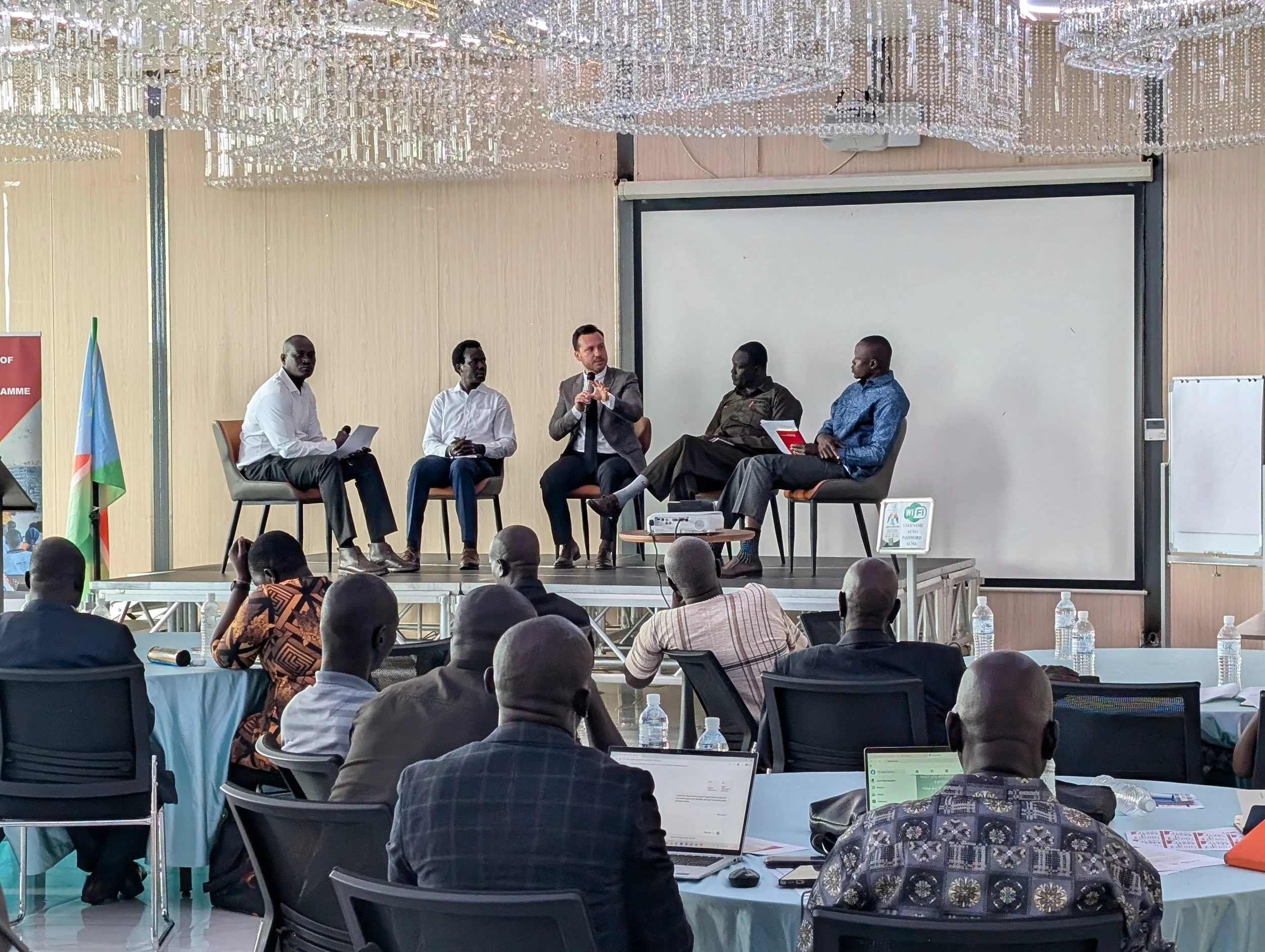
At the ASEP launch event, the panel discussion was moderated by Peter Nyarsuk (WTI) and speakers included: Mabor Tur (Director for ICT at MoGEI), Sergio Estupiñán (CEO & Founder, Beekee), Bhoryiaak Isaac (WTI), and Samuel Buol (WTI).
Windle Trust International (WTI) has launched a new offline-first digital learning platform for our Accelerated Secondary Education Programme (ASEP), making digital learning possible for students across South Sudan, even where reliable electricity and internet access are limited.
The launch event was held in Juba on 15 September 2026 by WTI, in partnership with South Sudan’s Ministry of General Education and Instruction (MoGEI) and education technology partner Beekee. The launch was covered by South Sudan Broadcasting Corporation (SSBC) News, with footage and speeches from the event.
ASEP is part of the World Bank-funded Building Skills for Human Capital Development in South Sudan (BSHCDSS) project and provides flexible secondary education for adult learners, including volunteer primary school teachers who have not completed their secondary education. More than 4,200 learners are currently registered on the programme, including 1,745 women and 2,474 men.
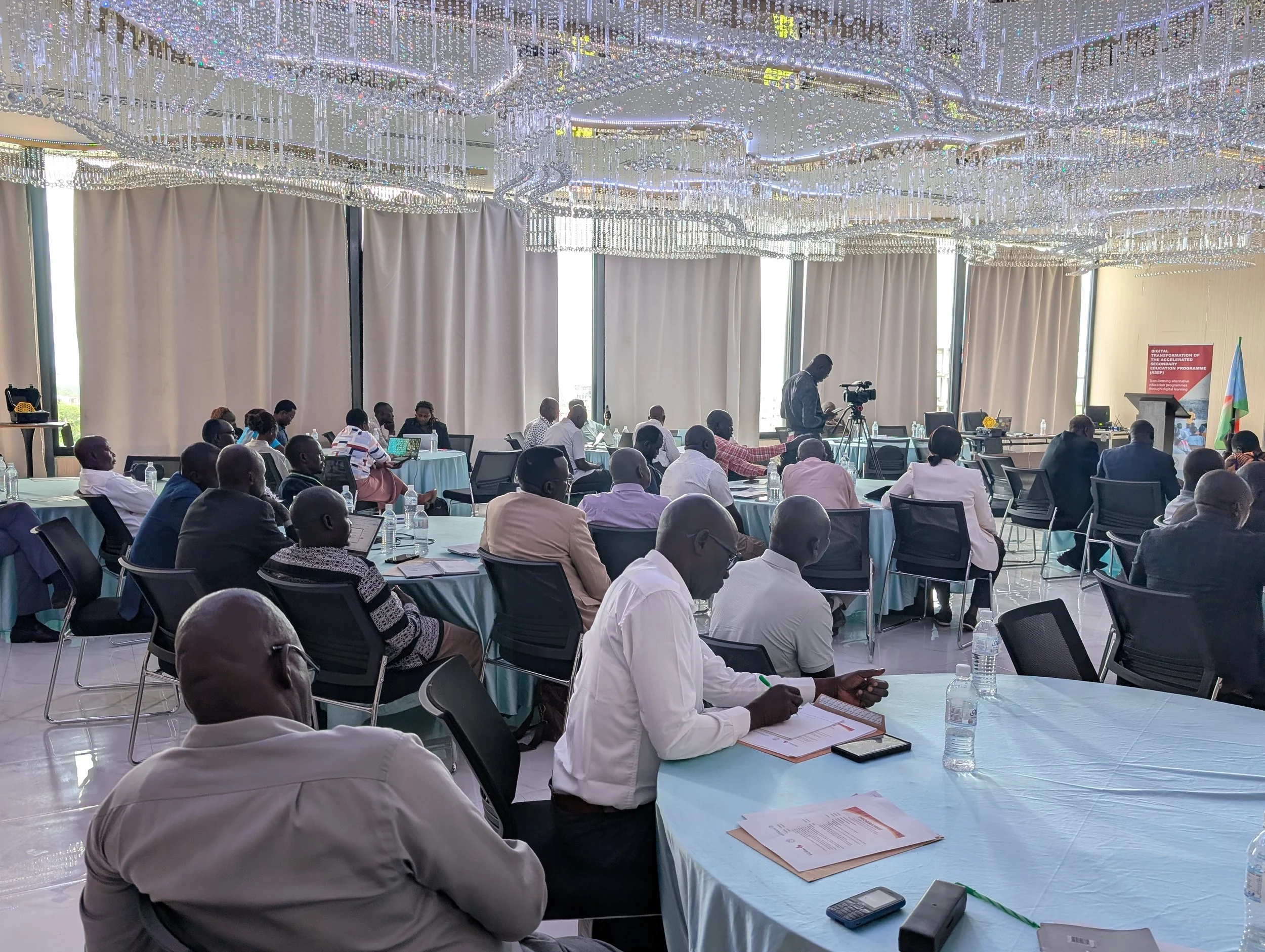
Attendees at the launch event included delegates from NGOs and INGOs, advocates from the National Education Coalition, academics from the University of Juba and the Episcopal University.
Digital learning designed for South Sudan
Digital learning often assumes access to reliable electricity, internet connectivity and devices. This remain limited across much of South Sudan, especially in schools outside major towns.
The new ASEP platform has been designed around this reality.
At the heart of the system is the Beekee Box - a self-contained device that stores lessons, learning resources, revision materials, assessments, and exam preparation content, allowing learners and tutors to access the platform without an internet connection. Learners and tutors can connect directly to it without an internet connection, while solar charging allows the system to operate in locations with limited access to electricity.
A key innovation lies in providing the same learning environment through several forms of access. Learners can access the same core learning environment through the Beekee Box, a dedicated mobile app, or online where connectivity is available. When a mobile signal becomes available, even briefly, the local system can synchronise small amounts of data with the central platform, including information on participation, activity and learning progress. Content and platform updates can also be downloaded and stored locally for continued use offline.
This means learning does not have to stop when connectivity is unavailable, while WTI and its partners can still gather information to monitor progress, identify where additional support may be needed, and strengthen the programme over time.
The digitised ASEP curriculum includes interactive learning modules, selected open educational resources, revision materials and practice and preparation for the South Sudan Certificate of Secondary Education examinations. Subject experts have reviewed the materials to ensure their quality and alignment with the national curriculum.
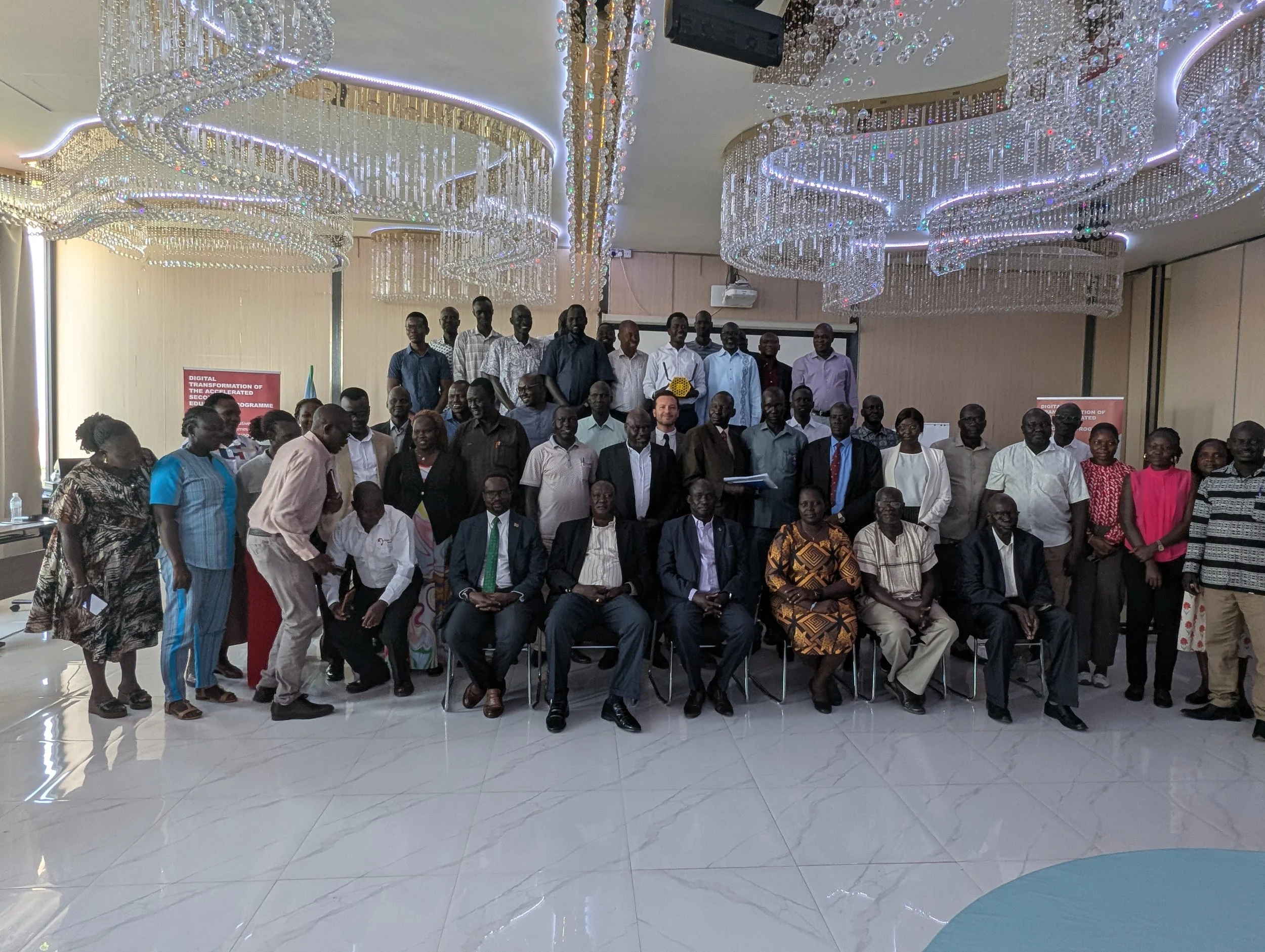
Group picture at the ASEP launch event.
A partnership for stronger education systems
The platform has been developed through collaboration between WTI, MoGEI, Beekee, the World Bank Project Implementation Unit and ASEP subject experts, ensuring the technology and learning materials respond to the needs of learners, tutors and the wider education system.
Speaking at the launch, MoGEI Undersecretary Hon. Omot Okony Olok applauded WTI for developing the platform, describing it as “a new breath into the education of South Sudan” in response to the challenges learners face in accessing learning materials.
WTI South Sudan Country Director Loke Justin Gordon described the platform as “a new hope, a new beginning” for secondary school learners facing limited access to learning materials and other structural barriers to education.
Dr Ador Riak Nyiel, Coordinator for the National Education Coalition, welcomed the platform and highlighted the importance of innovating in the education space.
Closing the launch, Director-General for TVET, Mr Simon Nyok Deng, reaffirmed the MoGEI’s commitment to continue improving access to quality education at this critical time for South Sudan.
Building towards wider access to digital learning
The platform will initially be piloted across 11 ASEP centres in nine states and two administrative areas, providing a broad test of the system across different operating environments.
The pilot will help assess the platform’s performance, gather evidence on its use, and explore how the approach could be extended to more centres, subjects and learning programmes.
For South Sudan, the project demonstrates that progress in digital education does not have to wait for universal electricity or broadband access. By combining offline learning, solar power, quality educational content and light-touch data synchronisation, ASEP can bring the benefits of digital education to more learners in hard-to-reach areas.
For WTI, it is an important step in making quality secondary education more accessible, flexible and responsive to the realities of learners across South Sudan.
Watch SSBC’s coverage of the launch to hear directly from those involved about the new digital learning platform and its potential to expand access to secondary education in South Sudan.