
UK Visa Restrictions and Sudan’s Future: A Student’s Perspective
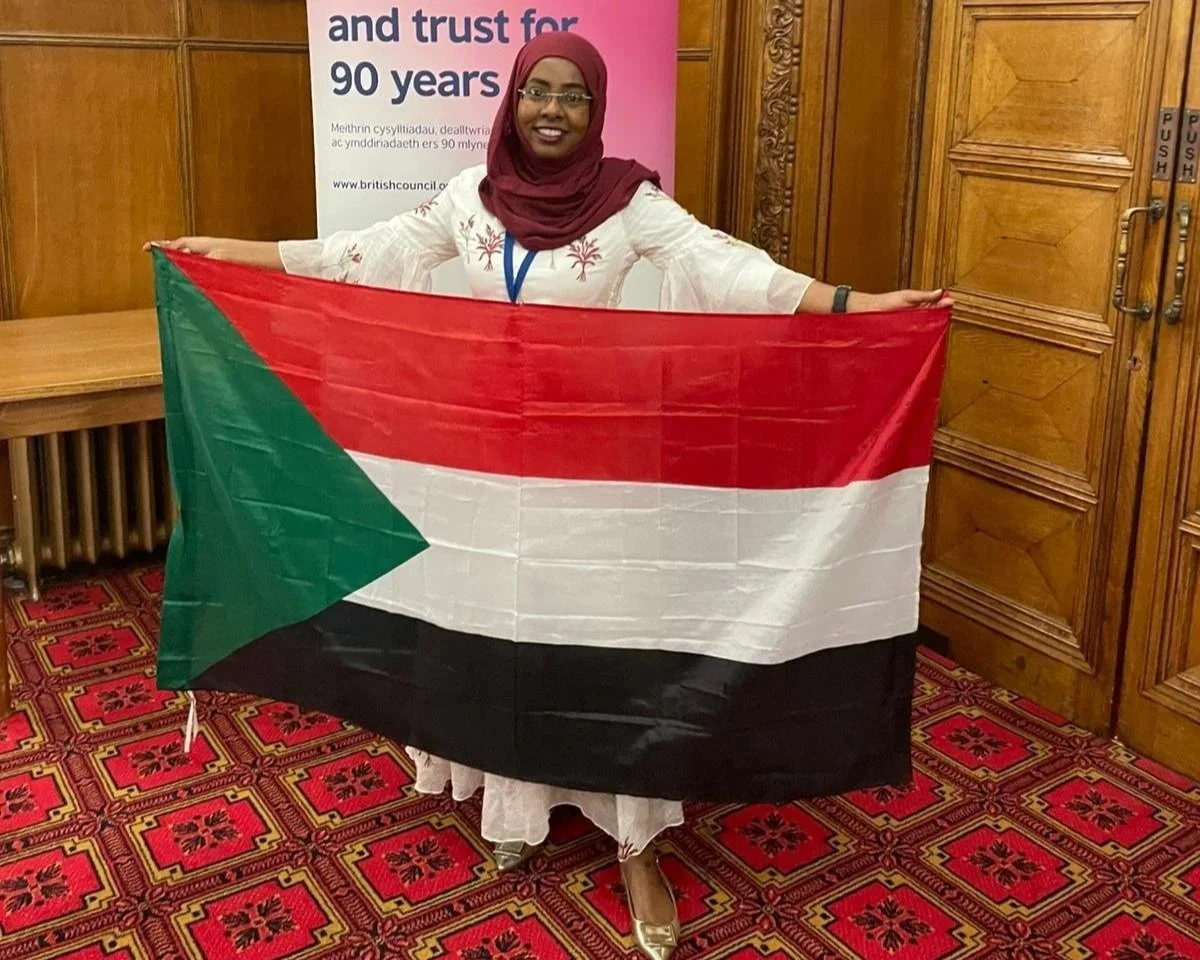
Dr Alaa, pictured with a Sudan flag.
As conflict continues to disrupt education systems in Sudan, access to international study opportunities has become increasingly important for students seeking to continue their learning and contribute to their country’s future recovery. Recent UK policy changes affecting Sudanese student visas have raised important questions about access, equity, and the long-term impact on conflict-affected countries.
In this Expert View article, we hear from Dr Alaa Alamin, a dentist from Sudan and a WTI-supported scholar currently studying for her Master’s in Public Health and Health Promotion at Bangor University, who shares her perspective on education, opportunity, and rebuilding in the context of conflict.
How do restrictions on student visas affect Sudanese students seeking to study abroad?
The decision to stop all study visas for Sudanese students has caused significant concern among Sudanese students, who see education abroad as an important way to gain knowledge and skills that can later benefit their country. Since the war started in Sudan in 2023, many students have been forced to look for opportunities outside the country because the education system has been severely disrupted. Most universities and schools have been closed, and many students simply do not have the chance to complete their studies at home.
Despite these very difficult circumstances, many Sudanese students stay determined to continue their education. Even though the conflict has affected them emotionally and physically, they have not given up on their goals. Instead, they seek opportunities to learn and develop their skills so they can help to rebuild Sudan in the future.
For many students, applying to study abroad is not about permanently leaving their country. It is about learning from strong academic systems and getting experience that can help address the serious challenges Sudan is expected to encounter after the war. Many of us hope that peace will return soon so we can go back and use what we have learned to support our communities and help rebuild our country.
For students who have worked very hard to gain admission to UK universities and scholarships, policies that restrict study visas can feel disappointing. It can limit opportunities for talented and motivated people who are truly committed to education and development.
In such a difficult time for Sudan, supporting students through education is extremely crucial. It can help develop future professionals with the expertise and abilities needed to contribute to the country’s recovery and development when the situation improves.
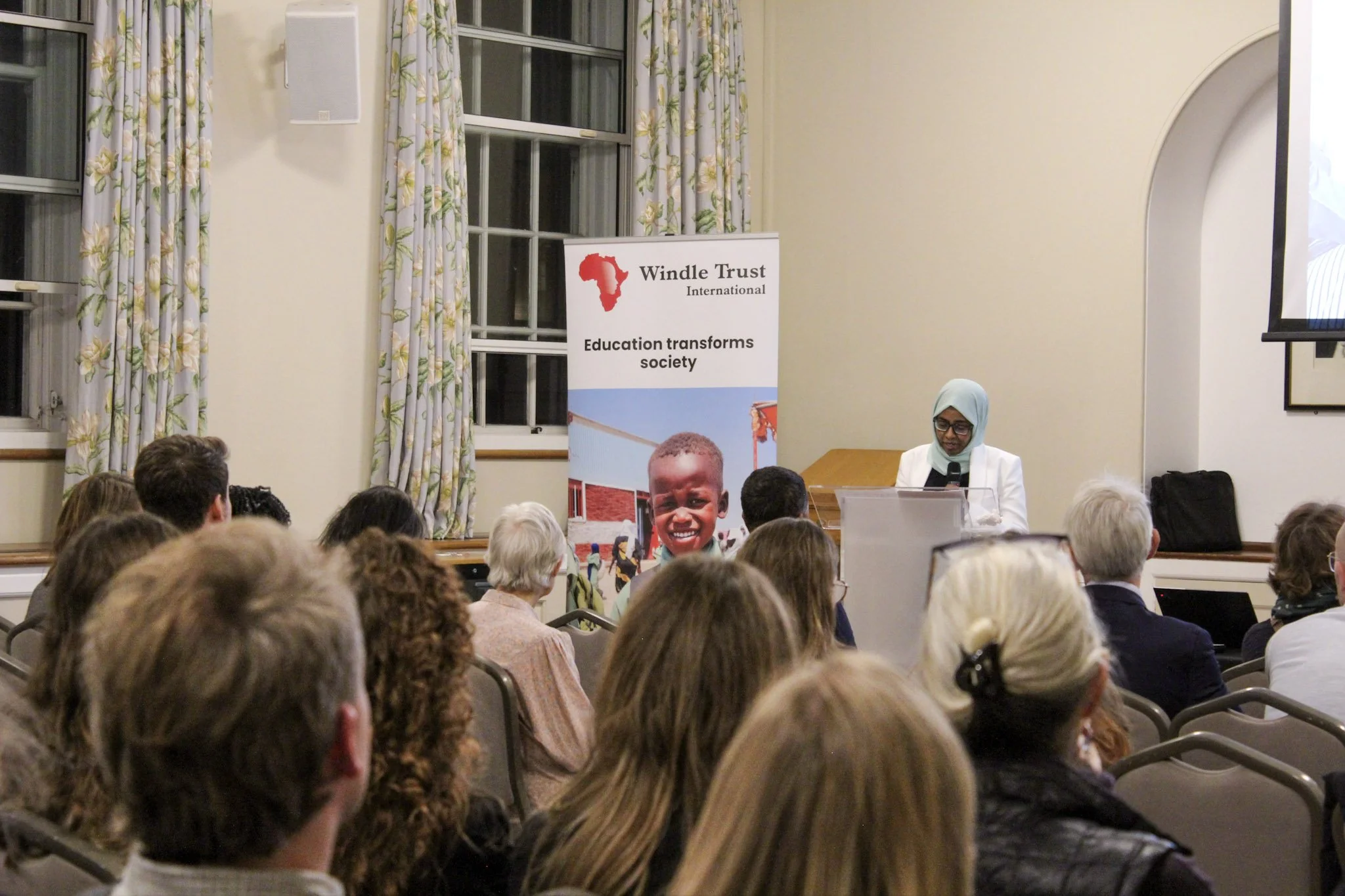
Dr Alaa speaking at the WTI ‘Educating for Change’ event at the Goodenough College, London, in November 2025.
How is postgraduate study helping build skills for Sudan’s recovery?
Achieving a scholarship to study at Bangor University has played a significant role in developing my professional skills and strengthening my ability to contribute to rebuilding Sudan’s health system after the conflict.
Through the MSc in Public Health and Health Promotion, I have expanded my knowledge beyond clinical dentistry and gained a broader understanding of public health principles, health promotion strategies, and evidence-based interventions. This training has allowed me to combine my clinical background with public health skills, including assessing community health needs, designing preventive programmes, and evaluating health interventions.
These competencies are particularly relevant for Sudan, where many communities, especially in rural areas, face limited access to healthcare services and low awareness of preventive health practices, including oral health.
Studying public health has also helped me develop a clearer understanding of how public health systems can strengthen healthcare delivery in resource-limited settings. The conflict has damaged health facilities, disrupted supply chains, and displaced large numbers of people, making access to healthcare even more difficult for vulnerable populations.
One practical approach I aim to support after the conflict is strengthening community-based primary healthcare through community health workers. Training local community members to deliver basic preventive and promotive health services can improve access to care in underserved and conflict-affected areas. Community health workers can provide health education, support vaccination campaigns, promote child and maternal health, and raise awareness about preventive practices such as oral hygiene. Because they work within the communities they serve, they can play an important role in bridging the gap between households and formal health services.
The scholarship has also allowed me to build valuable professional networks with Sudanese colleagues studying different health disciplines. Through these connections, we have begun discussing how we can collaborate in the future to improve community health services and raise health awareness once the conflict ends. Such multidisciplinary cooperation will be essential to rebuilding Sudan’s health system sustainably.
What has been the impact of the UK visa suspension on you personally?
The Home Office’s decision has had a direct personal impact on me and many of my friends. Personally, it has affected my ability to apply for PhD programmes at prestigious universities in the UK, even though I have experienced the high quality of education here and hoped to continue my academic journey at that level.
Many of my friends have also been affected. Several of them are very talented students who have already received admission offers from UK universities. They worked extremely hard to reach that stage, starting with learning English, preparing for language tests, and seeking opportunities in a highly competitive global environment.
After putting in so much effort and finally securing university admission, the decision came as a surprise. For many of them, it felt like their dreams of pursuing quality education disappeared overnight, leaving them feeling uncertain and anxious about their future opportunities.
Education is one of the most powerful tools for stability and development, particularly for people from countries experiencing conflict. Because of this, decisions that affect access to education can have a very deep personal and emotional impact on students.
What are the implications for Sudan’s recovery and long-term development?
I believe this decision could have a significant impact on Sudan’s efforts to rebuild after the conflict. At this critical time, supporting Sudanese students is crucial, as the country's future depends largely on its young generation.
Investing in education and developing skilled professionals is essential for rebuilding the country. Students who study abroad often gain knowledge, leadership skills, and international experience that can later help strengthen institutions and improve services such as healthcare, education, and governance.
If access to international education becomes more limited, it may slow the development of a new generation of professionals who could contribute to Sudan’s recovery and long-term development. Education is one of the most important tools for rebuilding societies after conflict.
However, I remain hopeful that international educational partnerships will continue. Many Sudanese students are highly motivated to learn and are committed to returning to serve their communities and help rebuild Sudan.
At a time when international study pathways are becoming more limited, initiatives such as the James Aryam Scholarship are more important than ever. If you want to support this work expanding opportunities for refugee scholars like Alaa, you can help by donating to the scholarship programme.
To learn more about the visa suspension and its impact, read our statement.